


Insights


How a Business Valuation Calculator Works (and What It Misses)
A business valuation calculator gives you a fast, directional estimate of enterprise value. Here is how the math works, the five risks it cannot see, and when to move from an online estimate to a formal valuation.

Business Budgeting for 2027: How to Build a Budget Your Team Will Actually Use
A four-week sprint from mid-September to late October turns the Q3 reforecast into a board-approved 2027 operating plan. Here is the timeline, the inputs that matter, and how to connect the model to a leadership dashboard.

Managing Working Capital: A Practical Guide for Owners of Growing Companies
Revenue and net income can both be growing while cash keeps getting tighter. This guide breaks down the cash conversion cycle, the receivable, inventory, and payable levers that free trapped cash, how to size a credit line from a 13-week forecast instead of a guess, and the five working capital schedules that belong in every monthly reporting package.

How to Value a Business Using EBITDA Multiples: A Step-by-Step Example
EBITDA is the currency of middle-market M&A, but the headline multiple only matters if your Adjusted EBITDA survives diligence. This guide walks a $12M manufacturer from reported net income through five add-backs, shows how three QofE disputes cut $1.38M of enterprise value, and bridges from enterprise value to the cash a seller actually takes home.

Lean Operating Model 101
Most companies manage departments. A lean operating model manages the flow of value to the customer instead, and the difference shows up in cycle times, working capital, and margin. This primer covers the five principles, the eight wastes worth hunting first, and why the research says there is such a thing as too lean: past a certain point, cutting cost starts costing you customers and people.

A Quick Start Guide to FP&A Basics for Startups
Running out of cash is rarely a surprise. It is usually a planning failure that showed up months earlier in a forecast nobody built. This guide walks founders through the FP&A basics that matter before Series B: driver-based models that fit on one tab, the burn and runway metrics investors actually ask about, and what your finance function should look like at each funding stage.
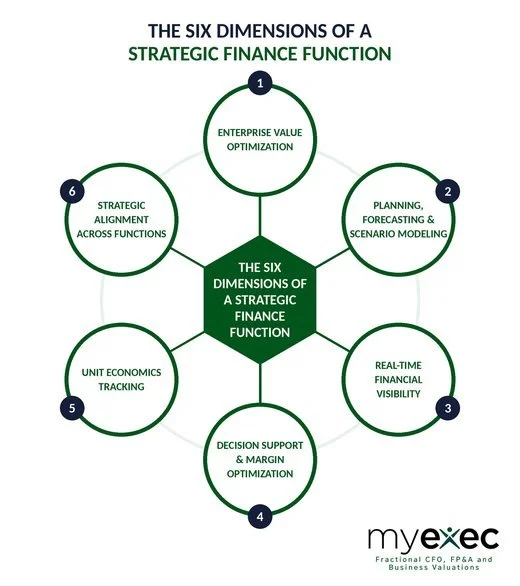
Understand the Six Dimensions of a Strategic Finance Function
Traditional FP&A answers what happened and why the budget was missed. Strategic finance addresses what the company should do next. This article defines the six capabilities that separate the two: enterprise value optimization, planning and scenario modeling, real-time financial visibility, decision support and margin analysis, unit economics tracking, and cross-functional alignment. Each dimension is illustrated with a reactive example, a description of how it works in practice, and a self-check question for assessing your own finance function.
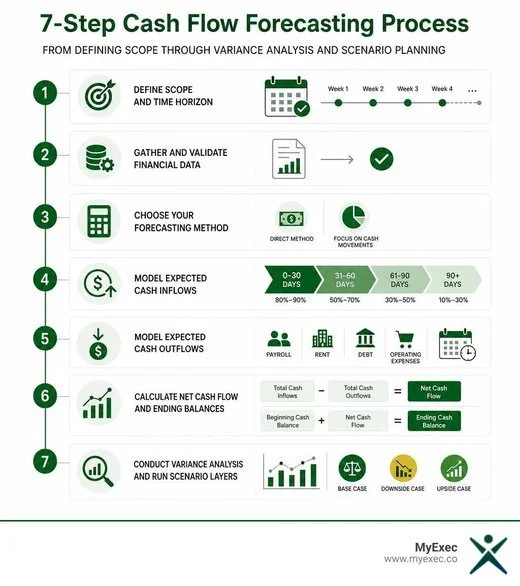
Step-by-Step Guide to Cash Flow Forecasting
A cash flow forecast is only useful if it reflects how money actually moves through the business. This guide covers the seven steps of building one: defining scope and time buckets, starting from reconciled bank balances, choosing between the direct and indirect methods, modeling collections on historical customer behavior rather than invoice terms, scheduling disbursements by payment date, and running a weekly variance review with downside scenarios. It also covers the common causes of forecast error and what a weekly maintenance cadence looks like in practice.

An Introduction to How to Value a Business
A business valuation is not one formula. It is three approaches, a set of adjustments to your earnings, and a handful of risk factors that decide whether you land at the top or bottom of your industry's range. This guide walks through the market, income, and asset approaches, how normalized earnings work, and what actually moves the number.

Everything You Need to Know About Business Valuation Cost Factors
Valuation quotes for the same company can vary by tens of thousands of dollars, and the difference is rarely the price list. It is the purpose. A rough sale range, an internal planning number, and a report that has to hold up with a lender or the IRS are three different levels of work. This guide breaks down the tiers, the price ranges, and how to match the engagement to the decision so you pay for what you actually need.

Beginner's Guide to Understanding Fractional CFO Value
A fractional CFO gives a growing company senior finance leadership without the six-figure salary, the equity, or the long recruiting cycle. This guide covers what the role actually does, how it differs from a controller or bookkeeper, and the inflection points where founder-led finance stops being enough, from cash flow volatility to a capital raise or acquisition.

Understanding Different Budgeting Methods and When to Use Them
Most budgets fail for the same reason: the method doesn't match the business. This week we break down the five main budgeting frameworks (incremental, zero-based, activity-based, value-based, and rolling forecasts), where each one earns its keep, and the warning signs that your current process is slowing the company down.

A Guide to Increasing Business Valuation
Two businesses with identical earnings can sell for wildly different prices. The difference is the multiple, and the multiple is a risk score. This week we look at what actually moves it: owner dependency, revenue quality, customer concentration, and clean financials, plus a 12 to 24 month roadmap for building value before you ever talk to a buyer.

A Guide to Red Flags in Financial Statements When Buying a Business
The seller's financials are evidence, not a sales brochure. This guide walks buyers of $5M to $50M businesses through reconciling internal books against tax returns and bank deposits, auditing aggressive add-backs, calculating true free cash flow, and identifying the balance sheet and customer concentration risks that should reprice a deal or kill it.

Financial Reporting and Statement Analysis: Beginner Guide
Reporting tells you what happened. Analysis tells you what it means. This guide covers the GAAP framework behind U.S. financial statements, how the four core statements connect, and the vertical, horizontal, and ratio techniques that turn a closed month into a decision. Written for owners and operators running $5M to $50M businesses.

The Difference Between Strategic Finance, Fractional CFO & Accounting Roles
Bookkeeping tells you what happened. A fractional CFO tells you what it means. Strategic finance tells you what to do next. Most owners treat these as one service and end up paying executive rates for data cleanup. This guide breaks down what each role handles day to day, how the cost structures compare, and the order to hire them in as revenue moves from $5M toward $50M.
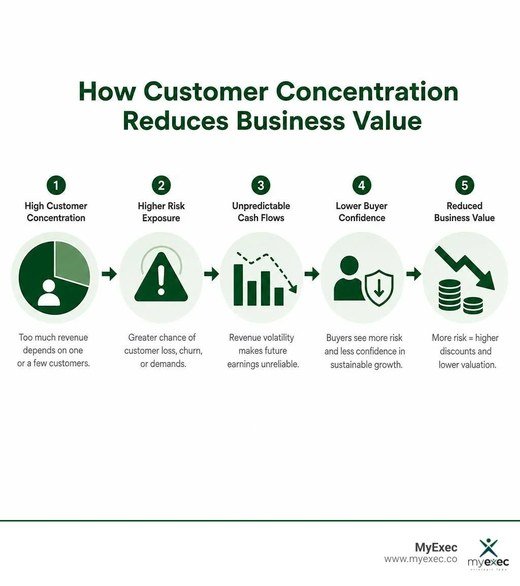
How Customer Concentration Affects Business Valuation
Buyers price customer concentration directly into your multiple. A single customer above 30% of revenue can cost you a full turn of EBITDA or more, and some buyers walk entirely. This article covers the thresholds buyers use, how the discount math works, and what to fix before you go to market.
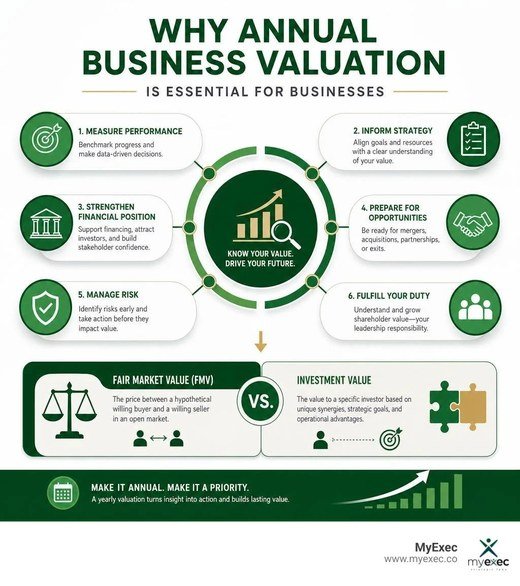
Understanding the Importance of an Annual Business Valuation
Most owners only get a valuation when a sale, dispute, or loan forces the issue. By then, weak spots like customer concentration or thin margins have already cost you leverage. This article covers why an annual valuation works as a performance scorecard, how it protects you in disputes and audits, and what it does for your position when a buyer or lender shows up.
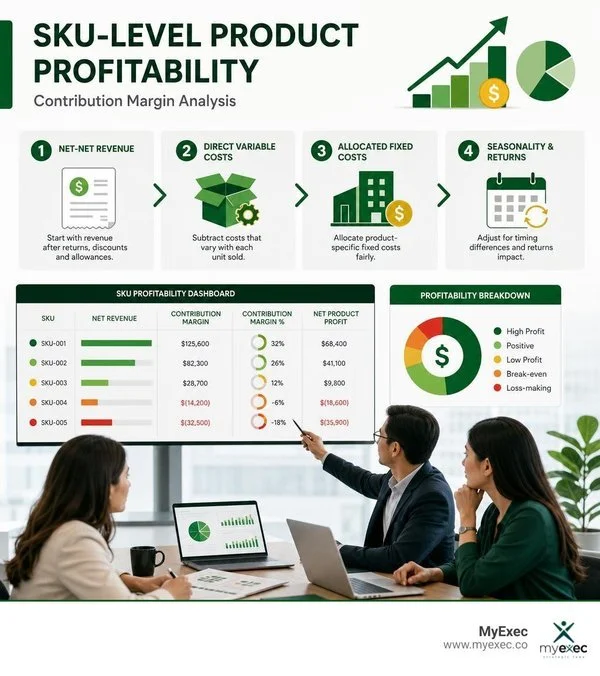
How to Calculate Product Profitability in 4 Easy Steps
Revenue is up but profit is flat? Learn how to measure true product profitability at the SKU level, uncover hidden costs eating your margins, and decide which products deserve your focus.

A Comprehensive Guide to Ratio Analysis Report
Most $5M-$50M businesses have financial statements but no decision-ready ratio analysis report. This guide covers liquidity, solvency, profitability, and efficiency ratios, plus how to interpret them in context instead of against generic benchmarks.